 HUATAO | Paper Machine Clothing
Press Felt Specifications and Trial Criteria After a Shoe Press Rebuild
Check press felt specifications for each position after a shoe press rebuild, then define trial measurements and acceptance criteria before ordering.
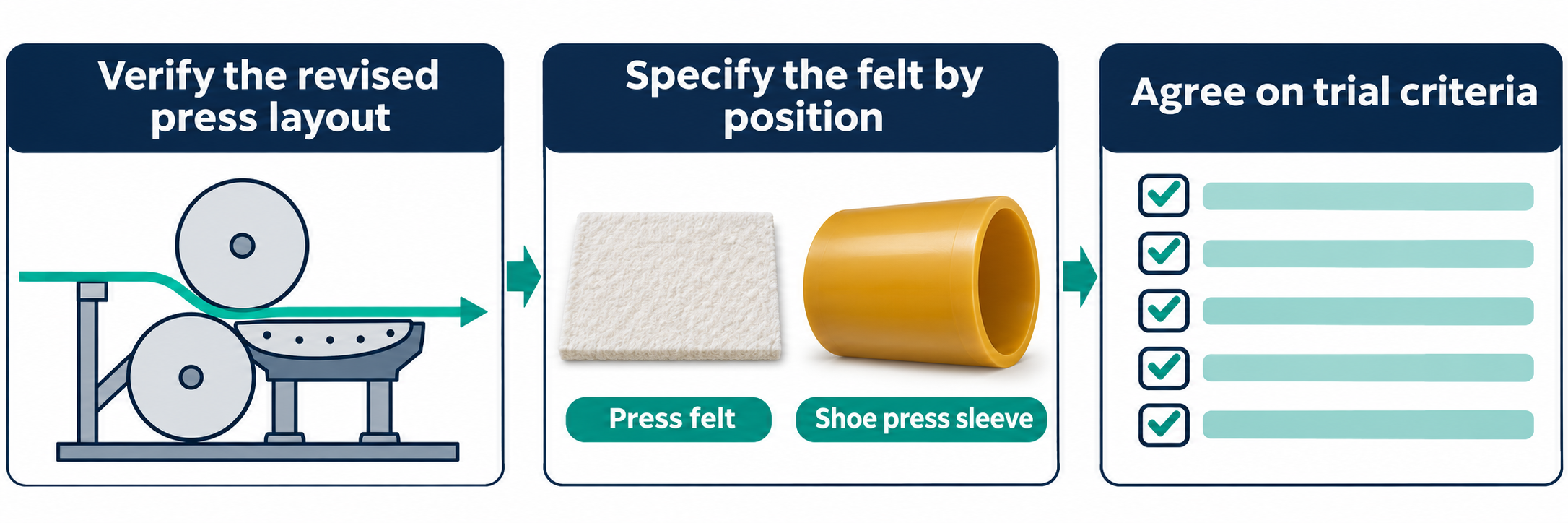
After a shoe press rebuild, reissue the press felt specification for each affected position. Start with the revised press layout, the normal operating range for each paper grade, and the path water takes through and out of the nip. Agree on trial criteria before placing the order so that production, maintenance, and purchasing can review the same results.
What Aquakraft’s Ferizli PM2 project shows
On May 7, 2026, Voith announced a contract to rebuild Aquakraft’s PM2 and its stock preparation system in Ferizli, Turkey. The announced scope includes a revamped press section with NipcoFlex shoe press technology. Voith listed a design speed of up to 1,200 m/min, a target basis-weight range of 80–200 g/m², and a planned startup in Q4 2027. These are published design and schedule figures. The actual startup date, felt specifications, supplier, and procurement schedule remain unconfirmed. Voith project announcement
What should purchasing reconfirm before requesting a quote?
Use the current press drawing and prepare one specification sheet per felt position. Give suppliers the normal operating range for each priority grade as well as the machine design limits. A maximum machine speed and an overall basis-weight range leave open which combinations the felt will actually run.
| RFQ item | What to confirm with the mill |
|---|---|
| Position and water removal | Identify the felt position on the revised drawing. Confirm the nip arrangement, the felt path, where water is removed, and the relevant roll surfaces and suction boxes. |
| Operating conditions | Provide the priority grades, their typical basis weights and running speeds, the expected line load range, and the applicable shower and vacuum settings. |
| Dimensions and installation | Verify running length and width, installation access, and the required installation method. For a seamed felt, specify seam orientation, closure requirements, and any sheet-marking limits. |
| Felt construction | Ask the supplier to propose a construction for the position and state its thickness and air permeability, including test methods and units. Confirm how the proposed felt fits the mill’s dewatering and sheet-quality requirements. |
| Shoe press sleeve interface | Record the felt and sleeve on separate specification lines. Confirm their compatibility with the press design and track changes to either item during the trial. |
How should the mill judge the trial?
Define the baseline, the measurement locations, and the acceptance limits before installation. Where possible, use a reference felt run on the rebuilt press at the same position. Historical data from the old press can help assess the rebuild as a whole. To assess the felt itself, compare runs on the rebuilt press under similar grades, basis weights, speeds, line loads, and vacuum settings.
- Dewatering. Measure sheet solids at the press outlet at a consistent location. Record the cross-machine moisture profile at an agreed measurement point and check for persistent wet bands.
- Sheet quality and runnability. Inspect for felt or seam marks and log web breaks with the operating conditions and any known causes.
- Break-in. Record how long it takes the felt to reach the agreed stable operating conditions. Review break-in observations separately from stable production data.
- Service life. Track performance over the run and document the reason for removal. A scheduled shutdown, accidental damage, and a measured loss of performance each give purchasing different information about replacement intervals.
Log changes to the shoe press sleeve, roll surfaces, showers, and suction boxes during the trial. If several settings or components change together, keep that context with the results when reviewing any change in press outlet solids or sheet moisture.
For a Huatao press felt inquiry, send the latest press layout, the position-specific specification sheet, and the proposed trial criteria together. Mark open parameters with an owner and a confirmation date so the quotation and trial can use the same specification revision.
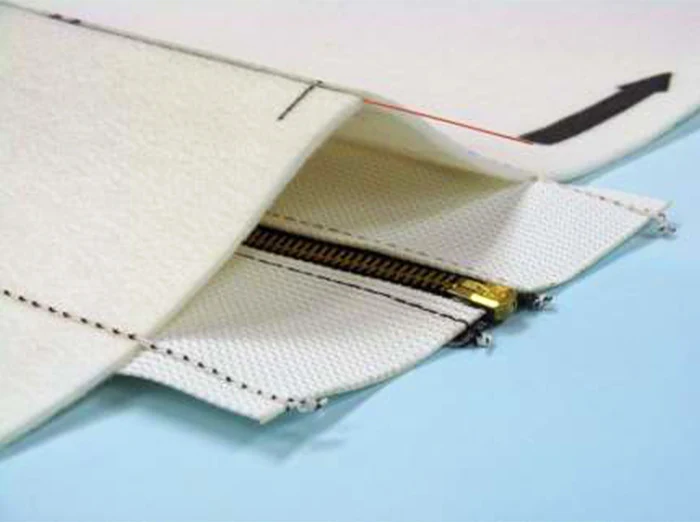 Seamed press felt