 HUATAO | Paper Machine Clothing
What Should a Board Mill Include in a Sizer Roll Cover RFQ?
Prepare a sizer roll cover RFQ with the roll drawing, operating ranges, wear history, and acceptance criteria for delivery and startup.
A sizer roll cover RFQ should include the approved roll drawing, the range of conditions at the nip, and the checks the mill will use to accept the finished roll. If the mill is addressing uneven size pickup, surface wear, or frequent regrinding, add the observations that prompted the order. This gives suppliers a common basis for proposing a cover and the mill a basis for comparing quotations.
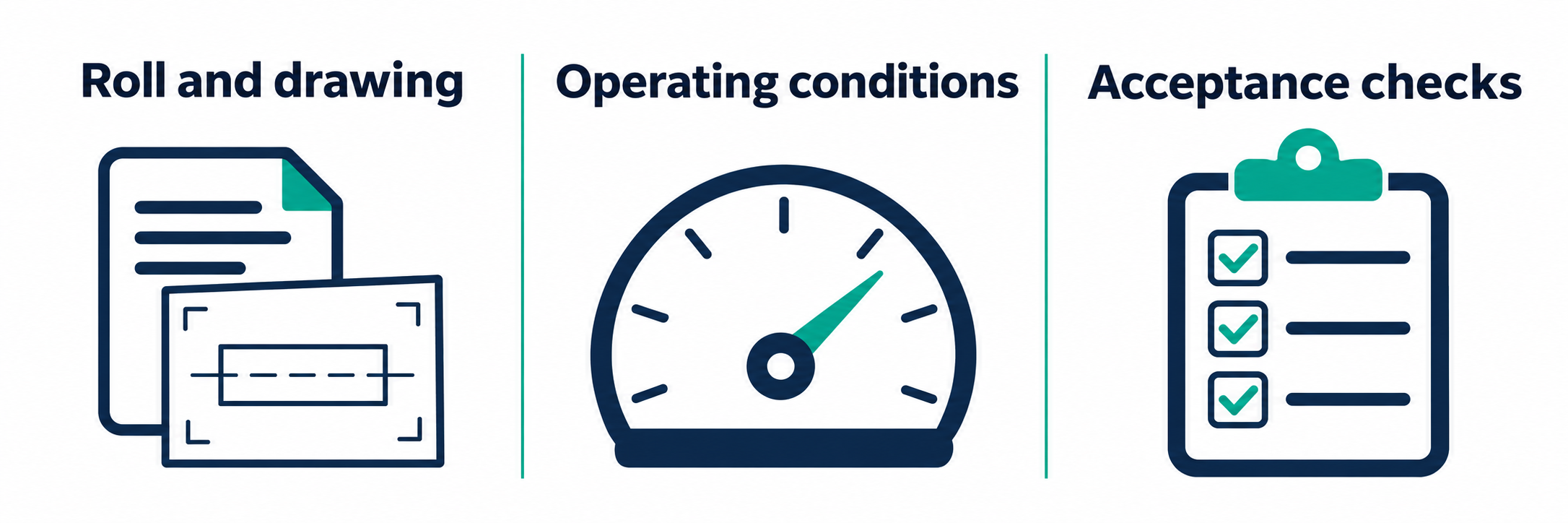
Identify the roll and the current cover
Specify whether the machine uses a film sizer or a pond size press. Give the machine ID, exact roll position, and latest approved drawing revision. Include the roll face length and the required finished diameter. For a recovering job, identify the existing roll and attach its most recent inspection or grinding report if available.
Record the current cover material, hardness, and surface finish where they are known. Include the measurement method and units. Where the drawing, maintenance record, and measured condition differ, ask the mill engineering team to confirm which requirements apply to the new cover.
Share the operating range and the wear history
Give the supplier the board grades, usual and maximum operating speeds, nip line load range, and the sizing medium and its working temperature range. Include relevant variations in chemistry, solids, and cleaning conditions when these can be shared. If conditions differ materially by grade, provide separate operating ranges for the grades that matter most.
Describe what was observed before the last grind or replacement. Useful records include where wear appeared across the roll face, how surface condition changed during the run, and whether pickup or profile changes coincided with a grade, load, or speed change. Include the time in service and the reason the roll was removed.
Agree on acceptance before placing the order
| Stage | What to agree with the supplier |
|---|---|
| Before dispatch | Finished diameter, face geometry, cover hardness and surface finish, with the test methods, measurement locations, tolerances, and required inspection report. |
| On receipt | Roll identification, packaging condition, visible surface condition, and how to document any shipping damage or discrepancy. |
| After startup | Reference grade, speed and load, the agreed stabilization period, and how the mill will check size pickup, cross-machine uniformity, and visible sheet or roll-surface defects. |
If a longer grinding interval is part of the trial objective, agree on how the mill will record hours in service and why it chose to regrind. Set a review date for the operating results. Have purchasing attach the same drawing revision and acceptance schedule to the request for quotation and the purchase order.